Millets have moved from a niche health-food category to a genuine global demand story. Here's a practical look at why, and what buyers should understand about the different grains often grouped under the "millet" label.
What's Driving the Demand
The United Nations declared 2023 the International Year of Millets, spotlighting crops that are naturally gluten-free, climate-resilient, and nutritionally dense — traits that align closely with where global food demand has been heading for years. India, as the world's largest millet producer, has been a natural beneficiary of that attention, with export interest broadening well beyond the traditional South Asian diaspora market.
Ragi, Bajra, and Quinoa Aren't the Same Thing
These three grains often appear together in "ancient grains" marketing, but they're botanically distinct — and it's worth knowing the difference:
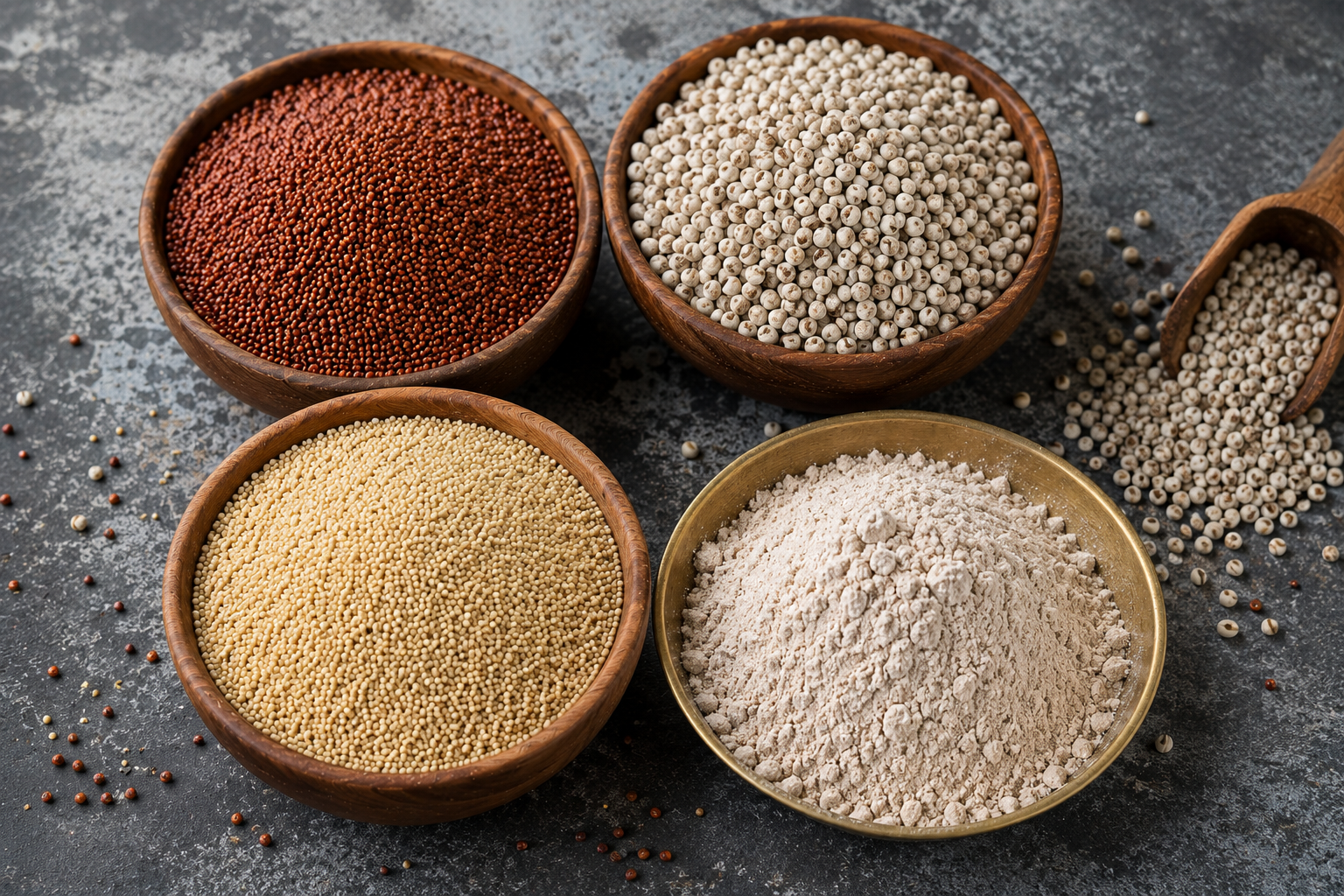
- Ragi (Finger Millet) and Bajra (Pearl Millet) are true millets — grasses in the same broad family, genuinely native to India's traditional cropping systems, high in calcium (ragi) and iron/magnesium (bajra).
- Quinoa is not a millet at all — it's a pseudocereal, botanically closer to spinach and beetroot than to any grass. It's simply used like a grain in cooking. Quinoa is increasingly grown in parts of India too, but it sits in a different category from Ragi and Bajra even though they're often marketed side by side.
This distinction matters for labeling accuracy in some markets, and it's a useful thing to know when a supplier's marketing lumps everything into one bucket without acknowledging the difference.
Processing Forms Buyers Should Know About
Millets are exported in several forms, and the right one depends on your end use:
- Whole grain — for further processing, milling, or traditional cooking use
- Flour — stone-ground or machine-milled, for bakery, food manufacturing, and health food applications
- Flakes — ready-to-cook, aimed at breakfast cereal and health snack manufacturers
Buyers building a private-label breakfast or snack product typically want flakes; food manufacturers and bakery ingredient buyers usually want flour; and buyers doing their own processing generally prefer whole grain for maximum flexibility.
What to Ask a Supplier
Beyond the standard purity and moisture specifications, it's worth asking which specific millet varieties a supplier can source, from which growing regions, and in which processed forms — since not every exporter carries the full range, and sourcing flexibility often matters more than a single rock-bottom price on one specific form.